
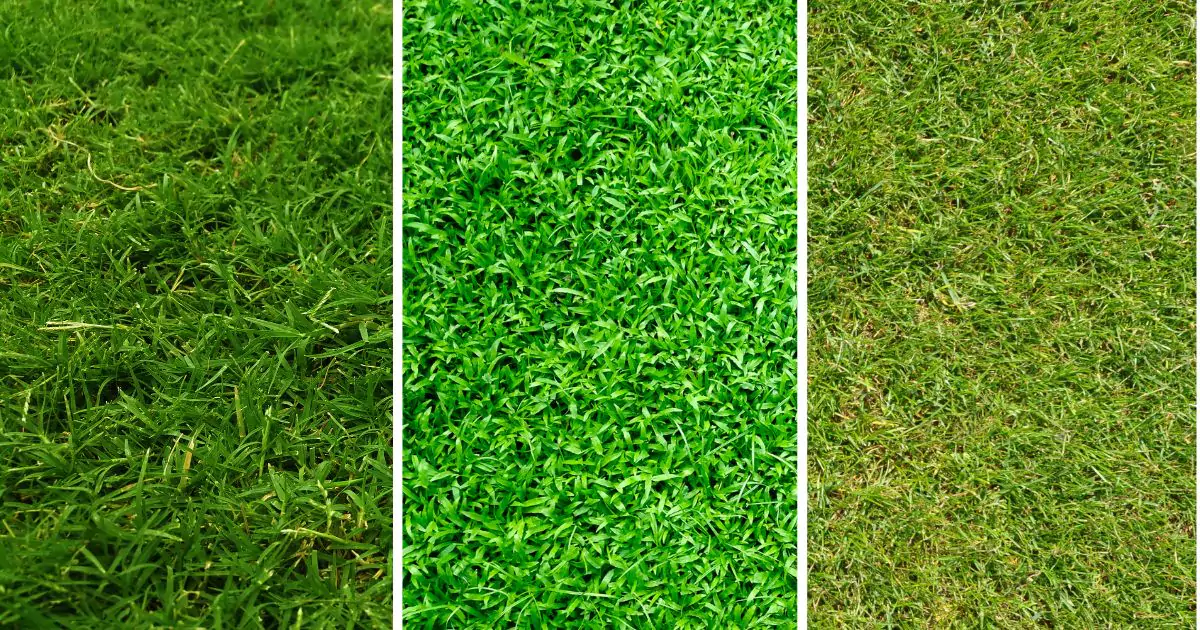
Choosing the best grasses to grow in Texas comes down to matching your yard’s sunlight, soil type, and maintenance preferences: Bermuda grass is unbeatable for full sun and high activity; St. Augustine grass excels in tree shade; and Zoysia grass delivers a lush, soft barefoot finish with moderate shade tolerance and reduced mowing.
Guide Table of Contents
We all know how Texas summers get pretty hot around here, and not every grass can handle 100°F weather without wilting or dying out. That’s why we’re going to chat about three of the absolute best warm-season grasses for our area: Bermuda, St. Augustine, and Zoysia.
Each one of these grasses has its own strengths, and understanding how they compare in sunlight demands, drought endurance, soil preferences, and mowing schedules will help you figure out which one is the perfect fit for your North Texas yard.
Understanding the North Texas Climate & Soil
Here in Denton County and throughout Dallas–Fort Worth, lawns face a grueling set of environmental demands. Extreme summer heat, mild winter cold snaps, unpredictable spring rain, and heavy black gumbo clay soils require warm-season turfgrasses engineered for Texas endurance.
Triple-Digit Summer Heat
Dallas–Fort Worth regularly experiences 30+ days above 100°F each summer. Grasses must have deep root architecture and natural heat-dormancy resilience.
Heavy Black Gumbo Clay
North Texas clay holds water tightly when wet and shrinks/cracks when dry. Selected turf varieties must tolerate tight, oxygen-scarce soil structures.
Variable Winter Freezes
Unlike coastal Texas, DFW experiences sharp winter freezes (including hard dips into the teens). Selected turf must transition into dormancy and green up reliably in spring.
Unpredictable Rainfall Patterns
From torrential spring storms to 60-day summer dry spells, North Texas turf needs flexible drought tolerance and superior root grip against erosion.
Top 3 Grasses for North Texas Lawns
Bermuda, St. Augustine, and Zoysia are the gold standard warm-season grasses for Dallas–Fort Worth. Each variety brings distinct performance strengths across sunlight, soil, water demands, and foot traffic.
Bermuda Grass
"Tough, heat-loving athletic turf that thrives under intense Texas sun and heavy foot traffic."
Why Choose Bermuda Grass?
- Handles extreme Texas heat and prolonged drought like a champion.
- Vigorous runners fill in bare patches and ruts at lightning speed.
- The undisputed #1 best grass for active dogs and kids running around.
- Low water requirement once root systems establish deep into the soil.
St. Augustine Grass
"Broad-bladed, deep emerald turf engineered for tree-shaded North Texas neighborhoods."
Why Choose St. Augustine Grass?
- Thrives under mature live oak, pecan, and cedar elm shade canopies.
- Broad, flat blades form a dense canopy that naturally crowds out weeds.
- Deep tropical blue-green hue that delivers classic southern curb appeal.
- Resilient performance in warm Texas weather where other grasses thin.
Zoysia Grass
"Plush, barefoot-luxury turf offering heat endurance, partial shade tolerance, and less mowing."
Why Choose Zoysia Grass?
- Exceptional drought endurance with deep, water-efficient root networks.
- Plush, carpet-like barefoot texture that feels like walking on an estate.
- Slower vertical growth cuts weekend mowing sessions nearly in half.
- Dense woven stolons and rhizomes choke out invasive summer weeds.
Tips for Taking Care of Your North Texas Lawn
Even the best Texas turfgrass requires smart, consistent care to maintain deep green color, pest resistance, and dense growth through 100°F heat waves.
Smart Watering
4:00 AM to 8:00 AM allows water to soak deep into soil before high sun and wind cause evaporation.
Deliver 1 to 1.5 inches per week across 2–3 deep sessions rather than light daily sprinkles to force roots deep.
Utilize a rain gauge or smart irrigation sensor; turn off sprinkler cycles when DFW receives soaking rains.
Targeted Fertilizing
Apply a balanced slow-release fertilizer in April after second mowing to kickstart post-dormancy growth.
Provide moderate nitrogen feed in early summer to maintain lush color without forcing excessive heat growth.
Apply high-potassium fall fertilizer in September/October to strengthen root cells against winter freezes.
Calibrated Mowing
Bermuda: 1–2 inches | Zoysia: 1.5–2.5 inches | St. Augustine: 2.5–4 inches. Never cut more than 1/3 of blade.
Mow Bermuda every 3–5 days, Zoysia every 7–10 days, and St. Augustine weekly during active summer growth.
Dull mower blades tear grass tips, leaving frayed brown ends that invite fungal leaf spot in humid Texas weather.
Ready for a Lush, Green Texas Lawn?
Choosing the right grass for your North Texas lawn doesn’t have to be complicated. Whether you go with Bermuda, St. Augustine, or Zoysia, all three are tough enough to handle our Texas weather when matched correctly to your site conditions.
With the right care—watering deeply, fertilizing on schedule, and mowing at proper heights—you’ll have a lawn that stays green and healthy all year long.
Need expert guidance or professional installation? SodScapes Texas delivers fresh, farm-cut sod daily across Lewisville, Flower Mound, Argyle, and the entire Dallas–Fort Worth area.
Texas Lawn Grass FAQs
What is the single best grass to grow in Texas?↓
There is no one-size-fits-all grass for Texas because sunlight exposure and water availability dictate success. For full-sun yards with active pets or sports, Bermuda grass is unmatched for durability and rapid self-repair. For yards with moderate tree shade (4–5 hours of sun) and homeowners wanting a plush barefoot luxury carpet with less mowing, Palisades Zoysia is the top residential choice. For yards with heavier oak or pecan tree canopies (3–4 hours of sun), St. Augustine is the proven shade performer.
Can Bermuda grass grow in shade in North Texas?↓
No. Bermuda grass strictly requires full, direct sun (7 to 8+ hours per day). When planted under tree canopies, covered patios, or along high fence shadows, Bermuda rapidly thins out, loses root density, and dies back to bare dirt. If your lawn has partial shade, choose Palisades Zoysia or St. Augustine instead.
How does North Texas clay soil affect lawn grass selection?↓
Dallas–Fort Worth soils often consist of heavy black Houston clay, which holds water when wet and bakes into a hard, cracked crust when dry. Warm-season grasses like Bermuda, Zoysia, and St. Augustine can all handle black clay, provided the ground is properly graded before installation, aerated annually, and watered deeply to encourage root penetration through compacted layers.
What mowing height is recommended for Bermuda, St. Augustine, and Zoysia in Texas?↓
Recommended mowing heights are: Bermuda at 1.0 to 2.0 inches (mowed every 3–5 days during peak summer for an athletic finish); Zoysia at 1.5 to 2.5 inches (mowed every 7–10 days); and St. Augustine at 2.5 to 4.0 inches (mowed every 5–7 days to protect broad stolons from heat stress).
When is the best time to water grass in hot Texas summers?↓
Always water early in the morning, between 4:00 AM and 8:00 AM. This gives moisture time to soak deep into the root zone before intense midday sun and winds cause rapid evaporation, and prevents fungal diseases that thrive on blades remaining wet overnight.
How often should I fertilize warm-season grass in North Texas?↓
A standard Texas lawn schedule includes three core applications: early spring (balanced fertilizer after green-up to awaken dormant roots), mid-summer (nitrogen-rich formulation to sustain vigorous growth), and early fall (slow-release formula to fortify root systems before winter dormancy).
More DFW Lawn & Sod Guides
Dive deeper into specific turf comparisons, summer watering schedules, and pet-friendly lawn options: