
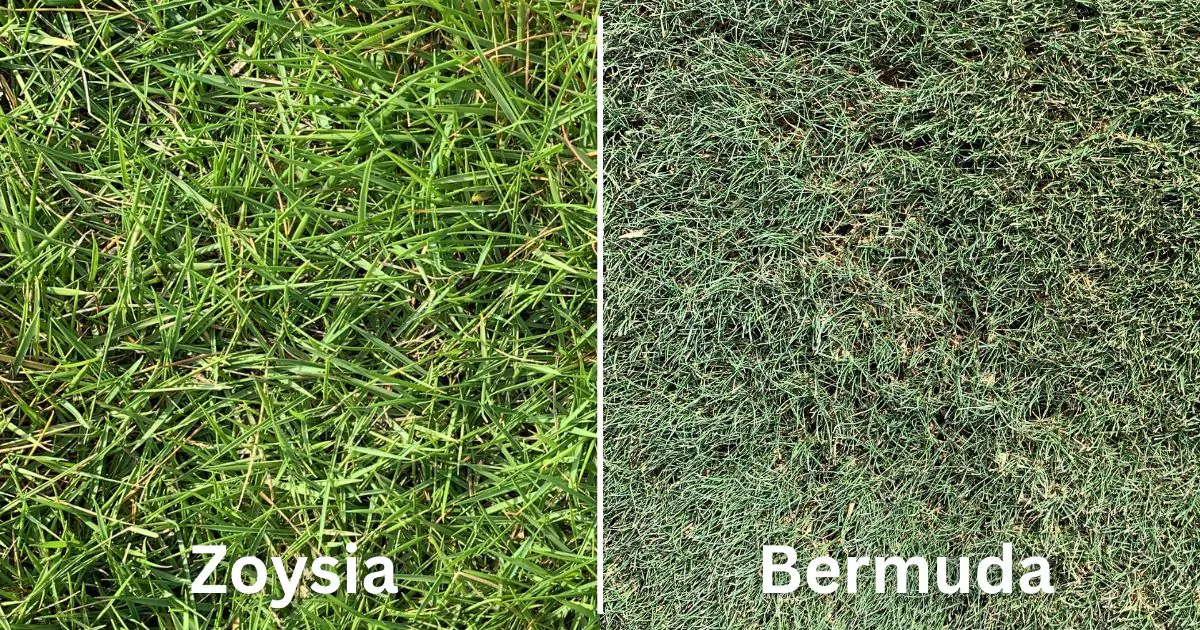
Comparing Zoysia vs Bermuda grass in Dallas–Fort Worth hinges on two main factors: shade and maintenance tolerance. Choose Zoysia (especially Palisades Zoysia) if your lawn has partial tree shade, you desire a plush barefoot carpet, and you want less frequent mowing during peak Texas summers. Choose Bermuda if your property has blazing all-day sun (8+ hours), heavy foot traffic or active dogs, and you want the absolute highest drought tolerance with an athletic-field finish.
Homeowners in the Dallas–Fort Worth metroplex often find themselves comparing Zoysia vs Bermuda grass sod types when planning a new lawn installation or renovation. Each variety offers distinct benefits and challenges in the context of our North Texas climate and heavy black gumbo or sandy loam soils.
Below, we provide an exhaustive comparison of Zoysia vs Bermuda grasses, focusing on their real-world suitability for Flower Mound, Lewisville, Argyle, and broader Dallas–Fort Worth landscapes.
Zoysia Grass
Characteristics: Zoysia is known for its fine, soft texture and deep green color. It creates a dense, luxurious turf that feels pleasant underfoot and produces an upscale, estate-like visual finish.
Growth Habits: This grass type spreads through both above-ground stolons and underground rhizomes. This dual-root structure forms a tight, thick carpet that naturally crowds out weeds and resists wear.
Climate Suitability: Zoysia adapts well to the warm DFW climate. It is moderately to highly drought-tolerant once established and can withstand varied weather conditions, including winter chills, better than St Augustine.
Maintenance Requirements: Zoysia needs less frequent mowing due to its slower vertical growth rate. It also requires moderate watering and feeding to maintain its lush, dense appearance.
Pest and Disease Resistance: Zoysia is generally resistant to common lawn pests and diseases, making it a sturdy, long-term choice for North Texas homeowners.
Bermuda Grass
Characteristics: Bermuda grass, with its fine texture and rapid growth, is popular for sports fields, golf courses, and sunny residential lawns. It's renowned for its unmatched durability, resilience, and clean athletic lines.
Growth Habits: Bermuda grows vigorously and spreads aggressively via both stolons and deep rhizomes. It is highly drought-resistant and recovers swiftly from wear, ruts, and pet damage.
Climate Suitability: Bermuda is ideal for the hot, dry summer climate across Dallas–Fort Worth. It thrives in full, intense sun and can endure triple-digit Texas temperatures with ease.
Maintenance Requirements: This grass requires regular, frequent mowing due to its fast summer growth rate. Keeping it cut low (1 to 2 inches) gives it that pristine, golf-course finish.
Pest and Disease Resistance: Bermuda grass is relatively resistant to common pests and fungal diseases, but its fast growth can lead to thatch buildup over time.
Comparative Analysis: Zoysia vs Bermuda in Dallas, Texas
How each sod type performs across key North Texas lawn requirements:
| Feature / Factor | Zoysia Grass | Bermuda Grass | Advantage |
|---|---|---|---|
| Blade Texture & Feel | Fine to medium; dense, soft, plush luxury carpet underfoot | Fine, dense; crisp athletic/golf-course texture | Zoysia (barefoot comfort) |
| Shade Tolerance | Good (handles 4–5+ hours filtered sun; Palisades excels) | Poor (demands 7–8+ hours direct, unfiltered sunlight) | Zoysia |
| Drought Resistance | Very Good (deep roots; handles normal DFW dry spells) | Exceptional (highest heat and drought tolerance in DFW) | Bermuda |
| Mowing Frequency | Every 7–10 days (slower vertical growth) | Every 3–5 days in peak summer (aggressive vertical growth) | Zoysia (less mowing) |
| Foot Traffic & Recovery | Very Good (dense mat resists wear; moderate recovery) | Superior (rapid rhizome/stolon recovery; athletic grade) | Bermuda (heavy sports/dogs) |
| Weed Resistance | Exceptional (dense dual-root mat chokes out weeds naturally) | Good (dense when mowed tight; susceptible if thinned) | Zoysia |
| Cold & Winter Hardiness | Very Good (dormant through winter; dependable spring green-up) | Very Good (dormant through winter; quick spring green-up) | Tie |
| Upfront Cost vs Maintenance | Higher initial sod pallet cost; lower long-term mowing & water inputs | Economical upfront pallet cost; higher mowing frequency | Preference / Budget |
1. Drought Resistance
Bermuda grass has an edge in drought tolerance, which is crucial for surviving severe Texas summers. Bermuda goes into semi-dormancy when water is scarce and recovers with remarkable speed once irrigation returns. Zoysia also features strong drought resistance due to its deep root system, but requires more regular watering to maintain its rich green color through intense July and August heat waves.
2. Shade Tolerance
Zoysia performs better in partial shade compared to Bermuda, which strictly requires full, direct sun. If your yard has mature oaks, pecans, or fence shadows, Palisades Zoysia is by far the superior choice between the two. Bermuda demands 7–8+ hours of direct sun daily and will quickly thin out and die back in shaded areas.
3. Maintenance and Care
Zoysia demands less frequent mowing thanks to its slower vertical growth rate, making weekends more relaxing for busy homeowners. Bermuda requires mowing every 3 to 5 days during peak summer months to keep it from becoming leggy, though Bermuda requires slightly less water overall once established.
4. Aesthetic Appeal
Zoysia provides a lush, dense, barefoot lawn with a deep emerald hue that feels soft and luxurious underfoot. Bermuda offers a crisp, manicured, athletic field or golf-course appearance with fine blades that look pristine when mowed tight.
5. Cold Tolerance
Zoysia is more resilient to cooler temperatures, making it a dependable option for North Texas's variable winter weather. Both grasses go dormant in winter and turn golden brown, but both return reliably in spring without the patchy winter-kill risk seen with St Augustine.
Best Use Cases: Which One Fits Your Yard?
- For plush, comfortable lawns: Soft, dense barefoot carpet feel for kids and family lounging.
- For partially shaded yards: 4 to 5 hours of filtered sun beneath trees or fence lines.
- For less frequent mowing: Slower vertical growth cuts mowing intervals nearly in half.
- Natural weed suppression: Dense woven root mat chokes out competing weeds.
- For drought-prone areas: Superior drought tolerance handles tough Texas water restrictions.
- For sun-drenched lawns: Excels in 8+ hours of full, unobstructed Texas sunlight.
- For high-traffic lawns: Active dogs, sports, and frequent backyard activity.
- For budget-conscious initial installs: Lower upfront pallet cost per square foot.
Zoysia vs Bermuda: The Bottom Line
In North Texas, whether you choose Zoysia for its lush appearance, barefoot softness, and shade tolerance, or Bermuda for its supreme drought resistance and fast recovery, understanding their characteristics is key to a thriving lawn.
Your choice will ultimately depend on your specific lawn conditions—such as shade patterns from mature trees—maintenance preferences, and aesthetic desires. Keep in mind that long-term success also depends on proper soil preparation, laser grading, and careful initial establishment watering.
Also considering St Augustine? Explore our companion comparisons: Zoysia vs St Augustine Grass and St Augustine vs Bermuda Grass.
Zoysia vs Bermuda FAQs
Which grass is better for shade: Zoysia or Bermuda?↓
Zoysia performs significantly better in partial shade than Bermuda. Palisades Zoysia, in particular, can thrive with 4 to 5 hours of filtered sunlight under mature North Texas canopies. Bermuda grass requires 7 to 8+ hours of direct, unfiltered sun and will quickly thin down to bare dirt in shaded areas.
Which is more drought tolerant: Bermuda or Zoysia?↓
Bermuda grass holds the advantage in ultimate drought tolerance and quick recovery. Both varieties possess deep root systems that withstand Texas summer heat, but Bermuda can slip into semi-dormancy during severe drought and re-emerge rapidly once watered. Zoysia also has strong drought tolerance once rooted, but needs slightly more supplemental irrigation to stay emerald green through July and August.
How does mowing frequency compare between Zoysia and Bermuda?↓
Zoysia grows at a noticeably slower vertical rate than Bermuda, requiring less frequent mowing (typically every 7 to 10 days). Bermuda grows aggressively during peak summer and often requires mowing every 3 to 5 days at a low 1″ to 2″ cut to maintain an athletic, manicured look.
Which grass feels softer barefoot: Zoysia or Bermuda?↓
Zoysia is widely prized for its plush, carpet-like luxury feel under bare feet. While both have fine-to-medium blades compared to St Augustine, Zoysia creates a dense, cushioned turf mat that feels substantially softer and more comfortable for walking, playing, and lounging.
How do Zoysia and Bermuda handle North Texas winter freezes?↓
Both warm-season grasses go dormant and turn straw-brown in winter, but both handle DFW cold snaps well. Zoysia (especially Palisades) and Bermuda both exhibit strong cold hardiness compared to St Augustine, greening up reliably each spring with minimal risk of winter kill.
Does SodScapes Texas supply and install both Zoysia and Bermuda?↓
Yes. SodScapes Texas orders fresh farm sod direct from local turf growers, delivers it to your residential or commercial site, handles full ground preparation and grading, and completes professional installation across Dallas–Fort Worth.
More North Texas Turf Guides
Explore our full library of sod comparisons, watering schedules, and grass varieties designed for Flower Mound, Lewisville, Argyle, and all DFW properties.