
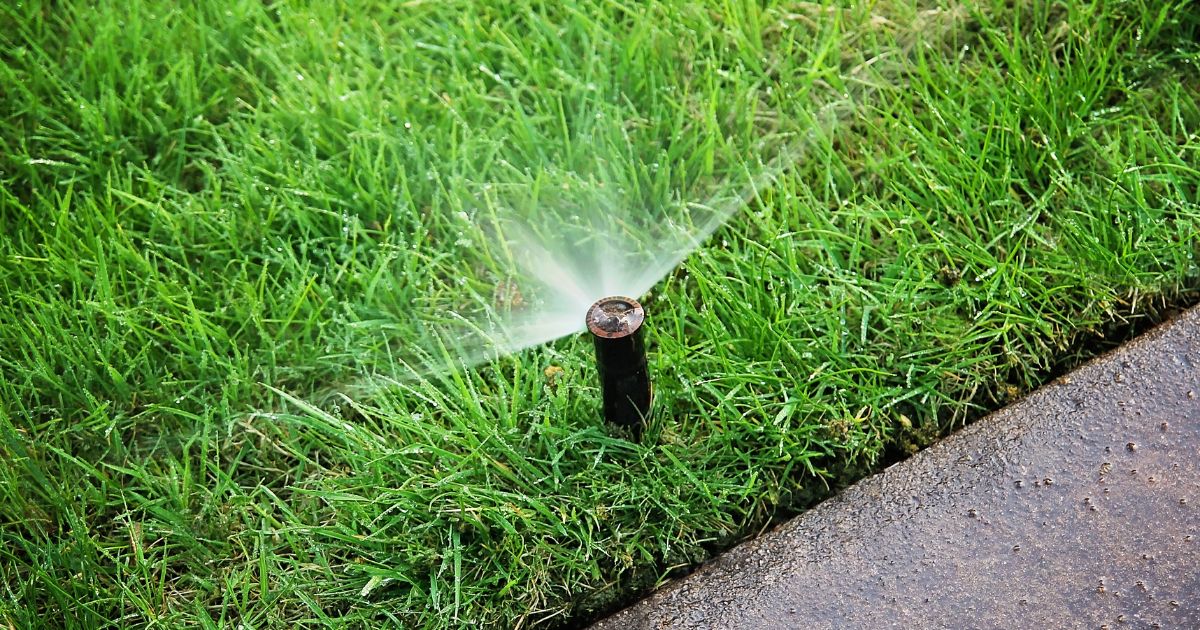
In 100 degree weather, water your North Texas lawn 2 to 3 times per week, targeting 1 to 1.5 inches of total water per week (including natural rainfall). Water early in the morning (4:00 AM – 8:00 AM), water deeply (6–8 inches into the soil profile), and avoid shallow daily sprinkles which cause weak, shallow roots and high evaporation losses.
It’s critical to keep your lawn healthy during the intense Texas summer, and knowing the right way of watering grass in hot weather is the single most important factor. When Dallas–Fort Worth temperatures climb past the 90s and linger at or above 100 degrees for weeks, a common question every homeowner asks is: just how often should you water grass in 100 degree weather?
Watering too little leaves turf parched, brittle, and vulnerable to heat dormancy; watering too frequently or at the wrong time of day wastes thousands of gallons and can invite fungal diseases like brown patch or take-all root rot. Below are practical rules, turf-specific guidelines, and irrigation tips tailored to North Texas.
Core Rules for Watering Grass in Hot Weather
- Water early in the morning: The best window is between 4:00 AM and 8:00 AM when temperatures are cooler and wind speeds are lowest. Avoid watering between 10:00 AM and 8:00 PM during peak midday heat, as high temperatures cause rapid evaporation before water ever penetrates the root zone.
- Water 2 to 3 times per week in 100° weather: Exact timing depends on your grass variety, sun/shade balance, and whether your soil is heavy clay or sandy loam. Aim for 1 to 1.5 inches of total water per week.
- Water deeply, not shallowly: Soak the soil 6 to 8 inches deep during each cycle. Shallow, frequent watering keeps moisture near the surface, encouraging grass to develop shallow root systems that wilt rapidly under heat stress.
- Raise your mower blade: Cutting grass too short stresses the plant and exposes soil to direct sun. Maintain a summer height of 2 to 3.5 inches (depending on grass variety) so the taller canopy shades the root zone and slows evaporation.
- Use a smart irrigation controller: Smart controllers with cycle-and-soak capabilities allow heavy North Texas clay soils to absorb water in short bursts without wasteful runoff into street gutters.
Table of Contents
Helpful Tips: The Golden Rule of Deep Watering
The single most impactful rule when watering grass in hot weather is simple: water deeply and infrequently. Deep watering trains grassroots to burrow 6 to 8 inches into the subsoil where moisture remains insulated from midday sun. Lawns watered lightly every day develop roots that hover within the top inch of soil—baking and wilting the moment temperatures hit triple digits.
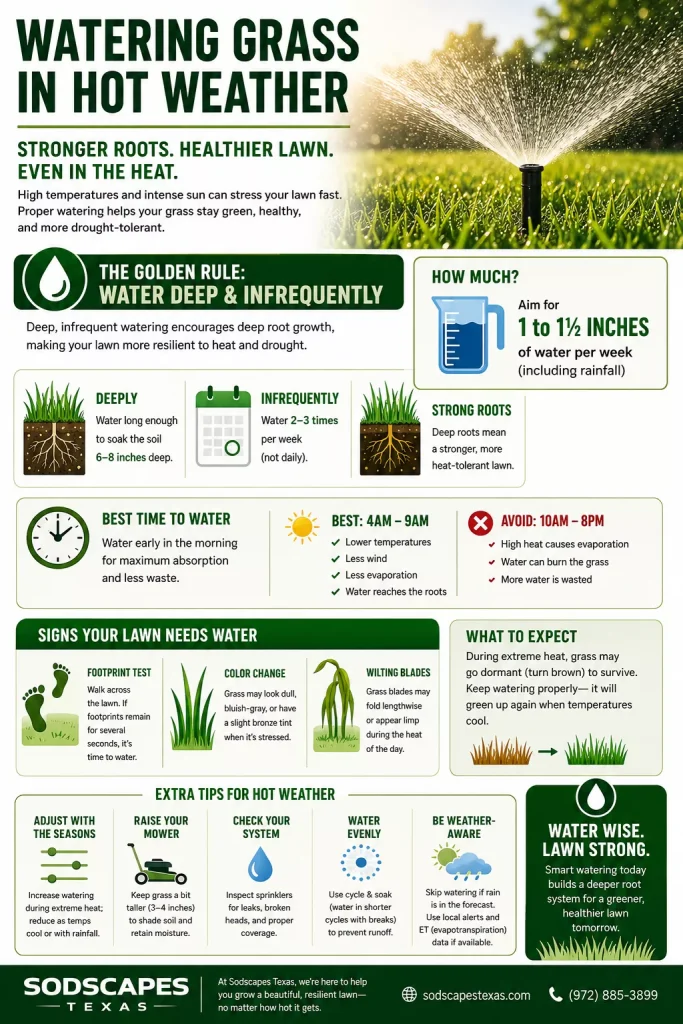
Watering Grass in Hot Weather infographic — SodScapes Texas
3 Signs Your Lawn Needs Water Right Now
Before turning on extra irrigation cycles, learn how to read what your turf is telling you:
Footprint Test
Walk across your lawn. If the blades stay flattened and footprints remain visible for several seconds, the cells have lost turgor pressure and need a deep soak.
Color Change
Grass under moisture stress shifts from bright, vibrant green to a dull, bluish-gray or hazy slate hue. This is the earliest visual indicator of thirst.
Wilting Blades
Blades fold lengthwise or curl inward along their center vein to minimize exposed surface area to the scorching sun.
How to Care for Zoysia Grass in the Summer
Zoysia grass is a warm-season turf widely celebrated across North Texas for its luxurious, carpet-like density and versatility. In order to maintain your lush, green lawn, it’s important to take care of your Zoysia grass during the intense summer months.
Palisades Zoysia is our #1 selling grass in the Dallas–Fort Worth metroplex because it does exceptionally well in both full sun as well as shaded areas (tolerating as little as 4 to 5 hours of filtered light).
How to Look After St Augustine Grass in Hot Weather
St Augustine grass is a very popular turf used for residential lawns right across Texas. This grass is known for its ability to tolerate hot weather and partial tree shade, but it still needs to be properly cared for during the summer months.
Because St Augustine has wider leaf blades than Bermuda or fine Zoysias, it transpires more water per day under triple-digit heat. Water your St Augustine grass two to three times per week, making sure to give it a deep watering so that the roots can properly absorb moisture and stay anchored in North Texas clay.
How to Water Bermuda Grass in Summer Heat
Bermuda grass is an elite full-sun turfgrass widely used for high-traffic areas like school sports fields, golf courses, and residential properties with all-day sun. Bermuda is celebrated for its unmatched heat and drought tolerance, but still needs regular watering to stay green and dense throughout the peak summer months.
Watering in the early morning is always best. Watering in early evening hours is acceptable if your local watering window requires it, but avoid watering late at night—leaving turf wet overnight in 80-degree humidity creates prime conditions for fungal pathogens.
Sprinkler Repair and Irrigation Efficiency
A watering schedule is only as good as the system delivering it. Broken sprinkler heads, misaligned nozzles spraying sidewalks, and clogged filters can leave large dry spots in your lawn while doubling your monthly water bill.
Check with your trusted sprinkler repair company to see if there is a way to set your timer or smart controller to maximize efficiency for watering grass in hot weather. Many modern controllers calculate local evapotranspiration (ET) rates and adjust run times automatically so your grass gets exactly what it needs without runoff.
Laying New Sod to Revitalize Heat-Damaged Lawns
If your property has grass that has faded, thinned out, or developed bare patches after severe summer heat waves or past drought, it may need to be replaced. Laying fresh, farm-sourced sod is the fastest and most dependable way to have a thick, green lawn again.
SodScapes Texas provides end-to-end installation: we cut out dead turf, prepare the soil bed, grade for proper drainage, order the grass direct from the farm, have it delivered to the job site, and complete the installation with tight seams and clean edges. Give us a call at (972) 885-3899 or request a free estimate online.
Professional Sod Installers in Dallas–Fort Worth
Here at SodScapes Texas we install natural sod throughout the Dallas–Fort Worth metroplex area, with a local focus on Flower Mound, Lewisville, Argyle, and surrounding Denton County communities.
We specialize in professional installation of all major warm-season grass types including drought-tolerant varieties of Bermuda grass, shade-tolerant St Augustine, and our #1 best-selling Palisades Zoysia.
We also offer complementary outdoor enhancements including tree trimming, rock installation, mulch installation, hardscapes, and drainage solutions.
Hot Weather Lawn Watering FAQs
How often should you water grass in 100 degree weather?↓
In 100-degree Texas heat, established lawns generally require deep watering 2 to 3 times per week, delivering about 1 to 1.5 inches of water total per week (including rainfall). Water deeply to 6–8 inches so roots grow deep rather than shallow.
What is the best time of day to water grass in hot weather?↓
The optimal window is early morning between 4:00 AM and 8:00 AM. Temperatures are cooler, wind is lower, and evaporation loss is minimized. Avoid watering between 10:00 AM and 8:00 PM when intense midday heat evaporates water before it reaches the root zone. Watering late at night can leave blades wet for hours, encouraging fungal lawn diseases.
How should I water Zoysia grass during peak Texas summer?↓
Palisades Zoysia has a deep root system and handles heat well in both full sun and partial shade. Water deeply 2 times per week (or 3 times during extended 100°+ stretches), targeting 1 to 1.25 inches of water per week. Keep mowing height at 2 to 2.5 inches to shade the soil and preserve moisture.
How much water does St. Augustine grass need in hot weather?↓
St. Augustine needs consistent deep watering 2 to 3 times per week during hot weather. Because its broad blades lose moisture faster than fine-bladed Bermuda, give it a deep cycle so moisture reaches the full root depth. Maintain a taller cut of 2.5 to 3.5 inches during summer to protect the stolons from heat stress.
Can Bermuda grass survive 100 degree heat with less water?↓
Bermuda grass has elite heat and drought tolerance. In extreme drought it will enter semi-dormancy and turn brownish, but recovers very quickly once watered. For a lush green look in 100-degree weather, water Bermuda deeply 2 times per week, aiming for 1 to 1.25 inches weekly.
What are the signs that my lawn needs water right now?↓
Look for three key indicators: (1) Footprint test — footsteps remain visible in the grass for several seconds instead of springing back, (2) Color change — the lawn takes on a dull bluish-gray or hazy tint, and (3) Wilting blades — grass blades fold lengthwise or curl inward to reduce sun exposure.
More Lawn Care & Sod Resources
Explore more guides tailored to Dallas–Fort Worth homeowners, from new sod watering schedules to side-by-side grass comparisons.